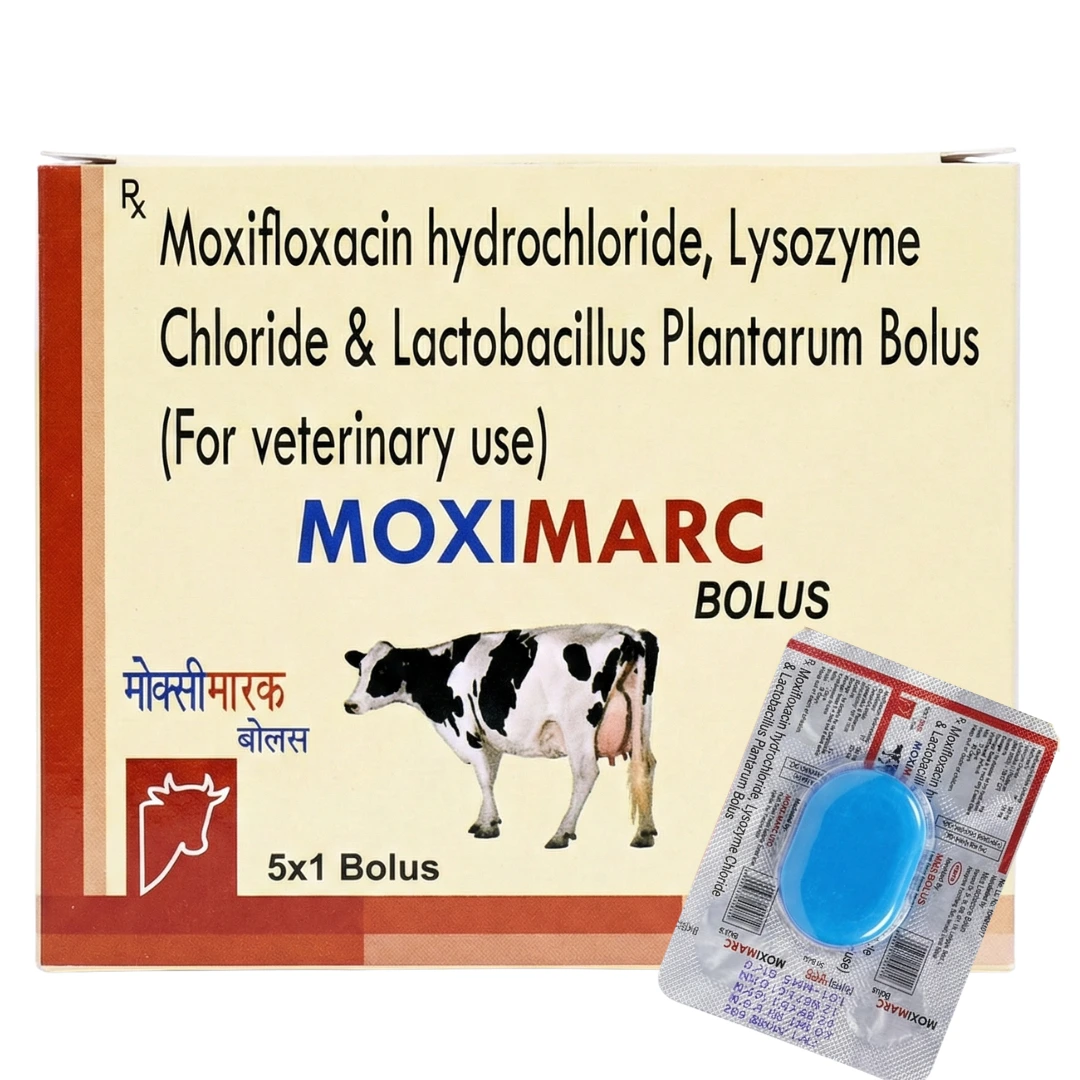
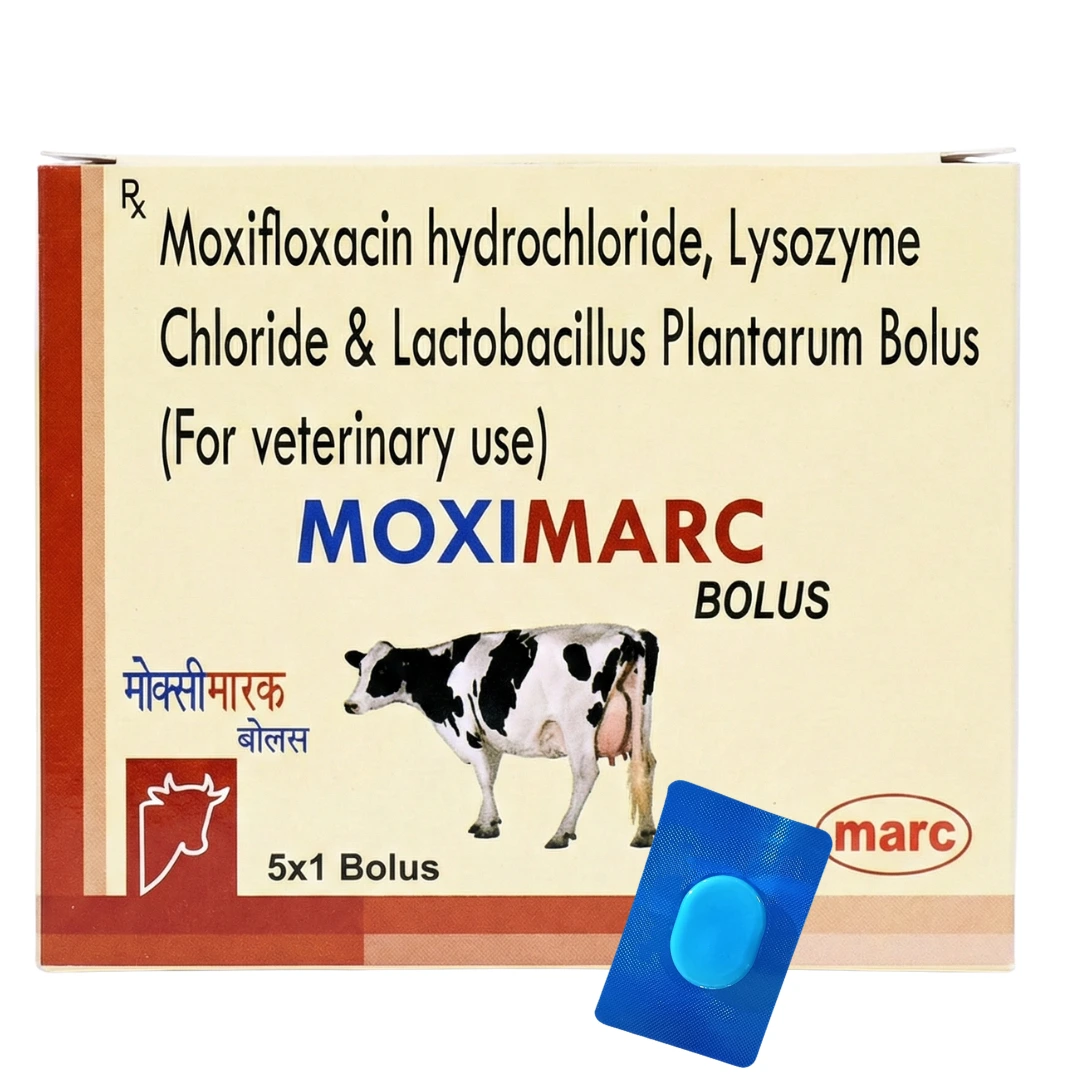
MOXIMARC Bolus is an advanced veterinary antibiotic formulation designed for the effective treatment of severe and stubborn bacterial infections in livestock animals. Timely control of bacterial diseases is essential to prevent production losses, complications, and long-term health damage in farm animals. MOXIMARC Bolus is widely used in cattle, buffaloes, goats, sheep, and other livestock under veterinary supervision.
MOXIMARC Bolus contains a powerful fourth-generation fluoroquinolone antibiotic combined with supportive enzymes and probiotics. This combination allows targeted bacterial eradication while supporting gut health and recovery during antibiotic therapy. MOXIMARC Bolus works against a wide range of gram-negative, gram-positive, and resistant bacterial infections.
In systemic and deep-seated infections, rapid tissue penetration and long plasma half-life play a critical role in therapeutic success. MOXIMARC Bolus offers deep tissue penetration with sustained antibacterial action, making it suitable for conditions where oral therapy is preferred over injectable treatment.
Bacterial infections such as mastitis, metritis, retention of placenta, enteritis, urinary tract infections, respiratory infections, and septicemic conditions can severely affect animal productivity. MOXIMARC Bolus helps control infection load, reduce disease severity, and support faster clinical recovery when used as directed by a veterinarian.
The inclusion of Lysozyme Chloride enhances antibacterial defense by breaking bacterial cell walls, while Lactobacillus plantarum helps maintain healthy gut microflora during antibiotic use. This balanced formulation helps reduce digestive disturbances and supports overall animal health during treatment.
MOXIMARC Bolus is manufactured under strict quality standards and is intended strictly for veterinary use. It should always be administered under professional guidance to ensure correct dosage, withdrawal compliance, and safe therapeutic outcomes.
Composition & Roles in Animal Health
| Ingredient | Quantity per Bolus | Role |
|---|
| Moxifloxacin IP | 1500 mg | Broad-spectrum fluoroquinolone antibiotic for resistant bacterial infections |
| Lysozyme Chloride | 200 mg | Breaks bacterial cell walls and enhances antibacterial action |
| Lactobacillus (L) Plantarum (IMAU 80065) | 15 × 10⁹ CFU | Supports gut microflora and digestive balance during antibiotic therapy |
| Excipients | q.s. | Ensures bolus stability and proper absorption |
Animals Suitable For
Cattle, Buffaloes, Goats, Sheep
(Use in other livestock only under veterinary advice)
Indications / Therapeutic Uses
Mastitis
Metritis and uterine infections
Retention of placenta
Severe enteritis and diarrhea of bacterial origin
Urinary tract infections
Respiratory infections including pleuro-pneumonia
Septicemia and hemorrhagic septicemia
Bone and joint infections
Gynecological infections
Dosage & Administration
Dosage: As directed by the veterinarian
General guidance commonly followed:
Administration method:
Administer orally using a bolus applicator
Ensure access to clean drinking water
Treatment duration to be decided by the veterinarian
Presentation & Packaging
Key Features
Advanced fourth-generation fluoroquinolone antibiotic
Broad-spectrum activity against resistant infections
Deep tissue penetration with long therapeutic action
Supports gut health during antibiotic treatment
Parenteral-equivalent oral therapy
Schedule H veterinary prescription drug
Storage & Handling
Store in a cool, dry, and dark place
Protect from moisture and direct sunlight
Keep out of reach of children
Safety Precautions & Withdrawal Period
For veterinary use only
Not for human use
Do not exceed prescribed dosage
Milk withdrawal period: 7 days
Meat withdrawal period: 28 days
Use strictly under veterinary supervision
FAQ Section
Q1. What is MOXIMARC Bolus used for?
It is used for treating severe bacterial infections in livestock animals.
Q2. Which infections respond well to MOXIMARC Bolus?
Mastitis, metritis, septicemia, respiratory infections, enteritis, and urinary tract infections.
Q3. Is MOXIMARC Bolus an antibiotic?
Yes, it contains moxifloxacin, a fourth-generation fluoroquinolone antibiotic.
Q4. Can MOXIMARC Bolus replace injectable antibiotics?
In many cases, it provides parenteral-equivalent oral therapy under veterinary guidance.
Q5. Can it be used during lactation?
Yes, with strict adherence to the milk withdrawal period.
Q6. Does it affect digestion?
The probiotic component helps support gut health during treatment.
Q7. How quickly does MOXIMARC Bolus act?
Clinical improvement is often observed within 24–48 hours, depending on infection severity.
Q8. Is MOXIMARC Bolus safe for long treatment courses?
Only if prescribed and monitored by a veterinarian.
Q9. Can it be combined with other antibiotics?
Combination therapy should be done only under veterinary supervision.
Q10. Is it safe for pregnant animals?
Use only if clearly indicated and prescribed by a veterinarian.
#MOXIMARC #VeterinaryAntibiotic #BroadSpectrumAntibiotic #LivestockMedicine #CattleMedicine #BuffaloMedicine #GoatMedicine #SheepMedicine #VeterinaryBolus #AnimalInfectionTreatment #MastitisTreatment #MetritisTreatment #SepticemiaTreatment #Fluoroquinolone #VeterinaryMedicineIndia #ScheduleHDrug #FarmAnimalCare #LivestockHealth #AntibioticBolus #AnimalHealthCare #VeterinaryUseOnly #LivestockTherapy #CattleInfection #BuffaloInfection #FarmVeterinary #VeterinaryPrescription #OralAntibiotic #AnimalMedicineIndia




































































 Sale - Buy 3 at 899 or Buy 6 at 1599


























Reviews
Clear filtersThere are no reviews yet.